What is Bourbon? Part 3: “…from a fermented mash of not less than 51 percent corn…”
For Part 3 of our “What is Bourbon” series, we look at the ingredients that make bourbon bourbon. It may seem straight forward, but when you really dig into the Code of Federal Regulations (and the Beverage Alcohol Manual from the TTB, in particular), you learn there are 42 different “types” of whisky, all with different defining characteristics – but many that are VERY slight.
First, as a bit of a refresher, recall that the legal definition of bourbon whisky, according to the TTB, is:
Whisky produced in the U.S. at not exceeding 80% alcohol by volume (160 proof) from a fermented mash of not less than 51 percent corn and stored at not more than 62.5% alcohol by volume (125 proof) in charred new oak containers.
So, why corn? The simplest answer is “corn is what was available”. When the early bourbon distillers of Kentucky began making whisky, corn was cheap and easy to come by. Once bourbon became popular, though, many people tried to pass their blended whisky or neutral spirits off as bourbon. To help guide the industry, the Federal government made several decisions around the end of the 19th century like the Bottled-in-Bond Act of 1897 (to separate straight whiskies from blended whiskies) and the Pure Food and Drug Act of 1906 (that first regulated what could be called Bourbon). And in the 1909 “Decision on Whisky”, President Taft determined that Bourbon Whisky must be made from a majority corn. But, it wasn’t until the fall of Prohibition that the government finally laid out the Standard’s of Identity for Distilled Spirits (SIDS) – which is part of the U.S. Code of Federal Regulations, Title 27, Part 5 – a chapter we as distillers refer to nearly every day. First adopted in 1935, the SIDS is where we get the definition above and the mandate that bourbon must have not less than 51% corn in the mash bill.
Although corn must be the predominant ingredient in a bourbon’s mash bill (recipe), most bourbon contains two or three other grains as well. Wheat and Rye are often used as “flavoring” ingredients in bourbon, and Malted Barley almost always makes up a percentage of the mash bill to offer enzymes that aid in fermentation and flavor development. Wheated Bourbon is known to hold up better over long stretches in a barrel. Bourbon with heavier doses of rye in the mash bill will have a bit more spice characteristic. Once you know the 51% rule, you can more easily define other whiskies, too. Rye whisky must contain not less than 51% rye. Wheat whisky must contain 51% or more wheat. And so on.
As a new distillery with new equipment and lots of ideas about mash bills for our whisky, the Long Road team decided to offer a series of experimental whiskies that we call the Wayfarer’s Whisky Series. These whiskies were small batch (some as small as a single 30 gallon barrel) and span several different class/types of whiskies. Over the past few years, we’ve released Wheat Whisky, Rye Whisky, and Malt Whisky, all milled, mashed, fermented, distilled, aged and bottled 100% on-site from locally grown ingredients.
With our Bourbon, we wanted to try a few different mash bills to determine what we liked best and what we wanted to invest in heavily for decades to come. Our team landed on four unique mash bills:
- Batch BB01 – THE FOUR GRAIN BOURBON
- 63% Yellow Corn
- 17% Rye
- 13% Red Winter Wheat
- 7% Malted Barley
- Batch BB02 – THE HIGH CORN & RYE BOURBON
- 81% Yellow Corn
- 12% Rye
- 7% Malted Barley
- Batch BB03 – THE WHEATED BOURBON
- 65% Yellow Corn
- 28% Red Winter Wheat
- 7% Malted Barley
- Batch BB04 – THE HIGH CORN & WHEAT BOURBON
- 81% Yellow Corn
- 12% Red Winter Wheat
- 7% Malted Barley
Each mash bill provided incredibly distinct flavor profiles, aromas, and finishes. The high wheat offered lots of vanilla, butterscotch, and caramel flavors. The high rye was more earthy with peppery spice notes.
After experimenting with these different mash bills, we scaled two of them to store in 53 gallon barrels for several years.
On Tuesday, April 10, we’ll be releasing the first batch of Long Road Straight Bourbon – the result of years of work, fine-tuning, and waiting.
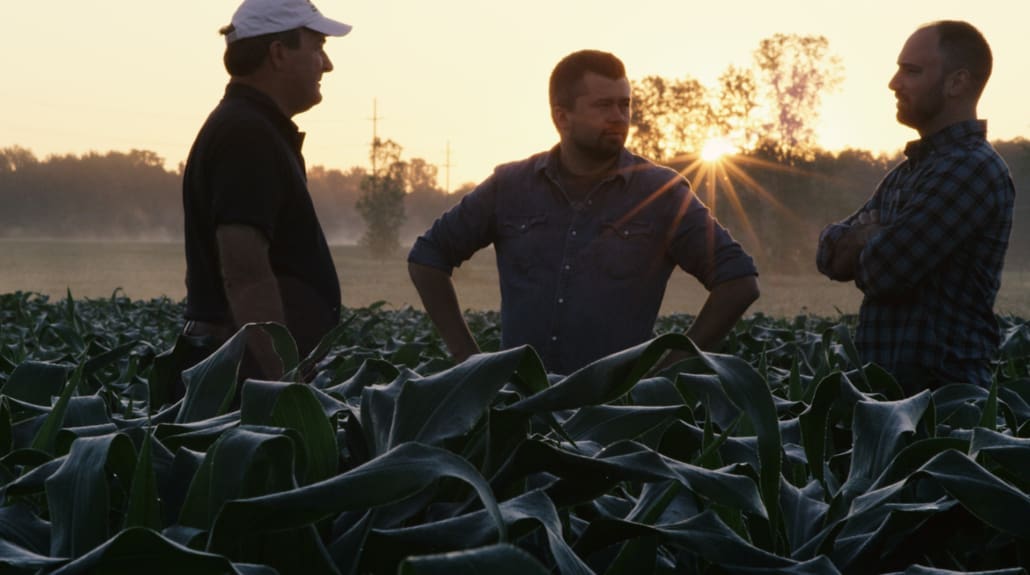
At Long Road, we’re proud to use all Michigan-grown corn, wheat, rye and barley, and handcraft every one of our spirits from scratch on-site. By partnering with farmers like Denny Heffron (Heffron Farms, Belding, MI) and Byron Center-based Pilot Malt House, we are able to create spirits that have a sense of place – offering uniquely Michigan characteristics that you won’t get anywhere else.
Stay tuned for Part 4 of the “What is Bourbon” series: “…and stored at not more than 62.5% alcohol by volume (125 proof) in charred new oak containers,” where we’ll explain the barrel aging process and its purpose!